SCREENS
TV Repairs
What TV Repairs Cost in South Africa
Almost every quote comes down to one question: is the screen itself damaged, or is it everything else? Those two answers sit at opposite ends of the price scale — and the law gives you more protection in between than most people realise.
The one question that decides everything
Before anything else, a television repair splits into two categories, and the gap between them is enormous. Almost every "is it worth fixing?" conversation is really a question about which side of that line your set falls on.
The panel is the screen itself — the bonded glass and film layers that actually produce the image, together with its backlight assembly. It is the single most expensive component in a television.
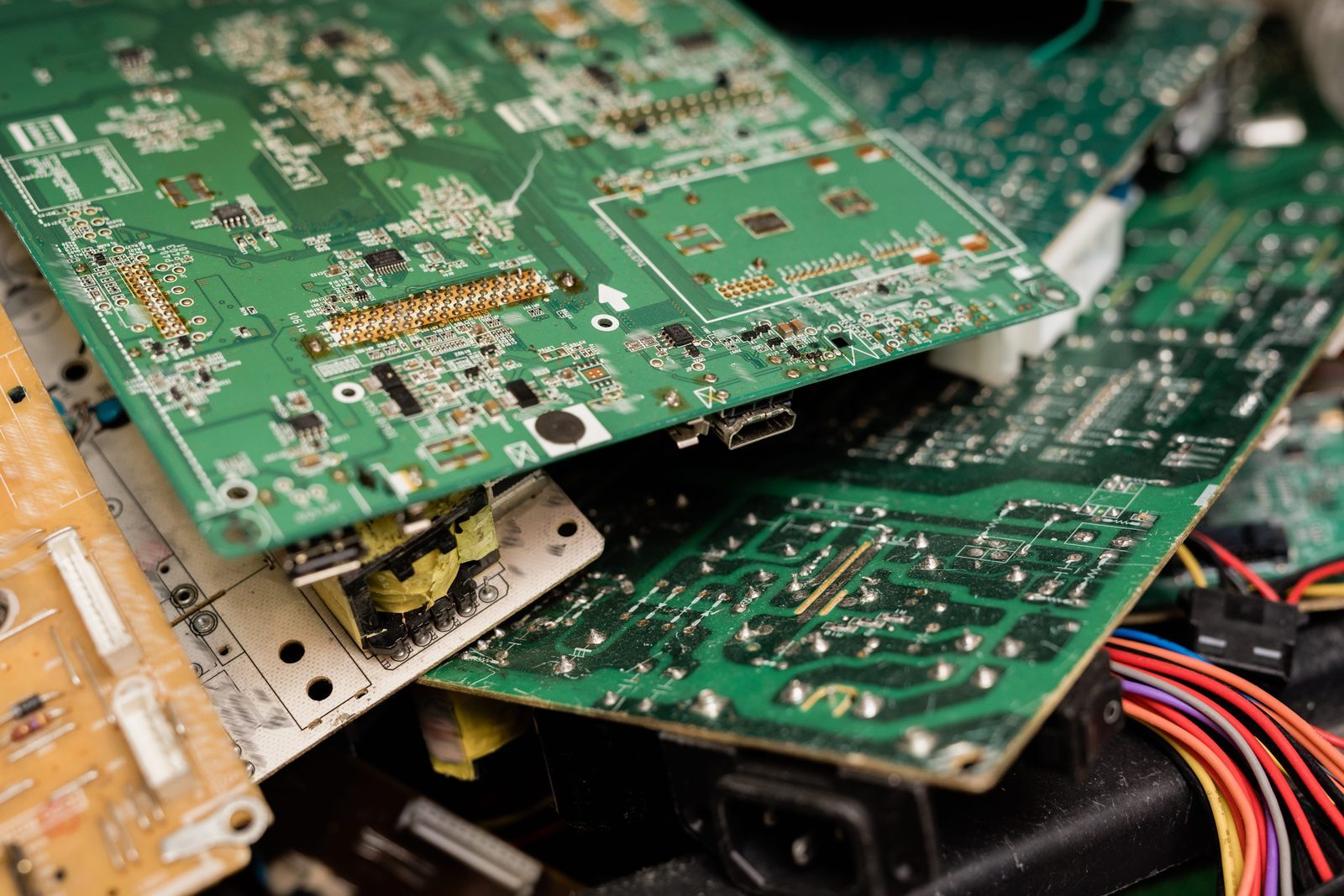
Everything else is the power supply board, the mainboard, the T-CON board, the backlight strips, the tuner, the HDMI ports and the speakers. These are repairable or replaceable at a fraction of the price of a new set, and they account for the overwhelming majority of the faults we see.
The European Commission’s Joint Research Centre reached the same conclusion when it reviewed repair economics for electronic displays. Gathering evidence from repair-sector stakeholders, its 2020 technical report records that "among the typical repair operations, the most expensive part to replace in a TV is the screen (LCD module)", while "the most common and cheaper repair operations are instead related to the remote control and power supplies (capacitors)", with mainboard, power board and sound board repairs sitting in between.
The good news
Most televisions that appear completely dead are in the second category. A set that will not switch on, or has sound with no picture, or shows lines across the screen, is usually a straightforward repair rather than a write-off.
Why a cracked or failed panel is nearly always the end
This is the question we are asked most often, and the answer disappoints people — so it is worth explaining properly rather than simply quoting a number.
A cracked or internally damaged panel cannot be repaired. The layers are bonded during manufacture and there is no process for repairing a fracture within them. The only option is replacing the entire panel assembly, and at that point you are buying the most expensive part of the television and paying for the labour to strip the set down and rebuild it.
The strongest evidence is what regulators did not require
There is a revealing signal in European ecodesign law. Regulation (EU) 2019/2021 obliges display manufacturers to make spare parts available to professional repairers for at least seven years after the last unit of a model is sold. The listed parts are the internal power supply, external connectors, capacitors, batteries and accumulators, and the optical drive and storage modules where fitted.
The display panel is not on that list. Regulators required manufacturers to support the repairs that are realistic and left out the one that is not.
Panels are also genuinely hard to get at
The same JRC review lists the practical barriers that make panel work uneconomical even when a part exists: a lack of standardisation between LCD screens, difficulty identifying the correct part, and the use of adhesives, noting that "some manufacturers use adhesives to fix the back cover of TVs which makes disassembly difficult with common tools".
Before you accept that it is the panel
Not every dark or distorted screen is a broken panel. Backlight failure, a T-CON fault and a loose ribbon cable all produce symptoms people reasonably mistake for panel damage, and all three are repairable. The torch test will usually tell you which you are dealing with in about thirty seconds. That is exactly what a proper diagnosis is for.
The repairs themselves, cheapest to dearest
We are not going to publish a price list, for a reason worth stating plainly: no honest one exists. The same fault costs different amounts on a 43-inch and an 85-inch set, and part availability for your specific model matters more than any average. What is stable is the order, and knowing where your symptom sits tells you a great deal before you phone anyone.
| Symptom you see | Usual cause | Where it is fixed | Relative cost |
|---|---|---|---|
| Completely dead, or clicks and will not start | Power supply board | Usually in your home | Lowest |
| Sound, but a black or unevenly dark screen | Backlight strips | Bench, sometimes on site | Low to moderate — scales with screen size |
| One input dead, loose connection | HDMI port or connector | Bench | Low |
| No boot, dead inputs, freezing | Mainboard | Bench | Moderate to high |
| Lines, doubled or scrambled image | T-CON board or ribbon cable | Bench | Moderate to high |
| Cracked glass, spider pattern, spreading dark bloom | Panel | Not economically repairable | Highest — usually exceeds a new set |
Ordered by typical cost, lowest first. Actual figures depend on screen size, brand and whether parts are still made for your model.
Two patterns are worth pulling out of that table. First, the cheapest repair on the list — the power supply board — is also the most common failure we attend in South Africa, for reasons covered below. Second, the only genuinely uneconomical row is the last one.
What makes the same repair cost more or less
Screen size
This is the biggest multiplier. The same backlight repair on a 75-inch set costs meaningfully more than on a 43-inch one: there are more LED strips, considerably more labour to open and reseal the set, and far more risk in handling a large panel.
Part availability
Common brands with well-supplied spares are cheaper and quicker to repair than obscure models or sets sold here only briefly. Age cuts both ways — an older set is often cheaper to repair because the parts are simple and plentiful, right up until the manufacturer stops supplying them, after which the repair can become impossible at any price.
Whether it can be done on site
Power, connection and many backlight faults are repaired in your home in a single visit. Board-level and panel-adjacent work needs a bench, proper lighting and the right tools, which means collection and return.
Diagnosis quality
A repairer who replaces boards until the fault goes away will always cost more than one who measures and finds it. Board-swapping is quick to quote and expensive to live with, because you pay for parts that were never faulty.
What South African law entitles you to
This is the part most people do not know, and it changes the balance of a repair conversation considerably. The Consumer Protection Act 68 of 2008 gives you specific, enforceable rights when you hand over a television.
You must be given an estimate, and you must authorise the work
Section 15 of the Act deals with pre-authorisation of repair and maintenance services. It provides that a service provider "must not charge a consumer" for repair work unless the supplier "has given the consumer an estimate that satisfies the prescribed requirements, and the consumer has subsequently authorised the work" — or the consumer has declined an estimate in writing, or pre-authorised charges up to a stated maximum.
The regulations set the threshold at which section 15 applies at R1.00 excluding VAT. In practical terms there is no such thing as a TV repair too small for this to apply.
The regulations also specify what an estimate must contain: a breakdown and total of the amount to be charged, the nature and extent of the repair, how long the quote is valid, and by when you must collect the goods.
Section 15(4) closes the obvious loophole. A service provider may not charge more than the estimate unless they have told you about the additional charges and you have authorised the work to continue.
On being charged for the diagnosis itself
The National Consumer Commission’s explanatory note on section 15 is blunt about this: "If the service provider did not tell you beforehand, you do not have to pay for the estimate, even if diagnostic work was done." A callout or assessment fee is perfectly legitimate — but you have to be told about it in advance.
Your repair carries a three-month warranty by law
Section 57(1) is short and unambiguous:
A service provider warrants every new or reconditioned part installed during any repair or maintenance work, and the labour required to install it, for a period of three months after the date of installation or such longer period as the supplier may specify in writing.
Note that it covers the labour as well as the part, that it runs from installation, and that a supplier may offer longer but not shorter. It is void only if the goods have been misused or abused, and it does not cover ordinary wear and tear.
And there is a second three-month rule
Section 56(3) is separate and less well known. If a supplier repairs goods and, within three months of that repair, the defect has not been remedied or a further defect appears, the supplier must replace the goods or refund the price paid. This sits alongside the six-month implied warranty of quality in section 56(2) that applies to goods on delivery.
What this means in practice
Ask for the estimate in writing before you authorise anything, keep it, and keep the invoice. Between section 15, section 56 and section 57 you have a documented price, a three-month warranty on the work, and a remedy if the same fault returns. A repairer who resists putting a quote in writing is telling you something useful.
Load shedding, surges, and why so many South African TVs fail
If you have wondered why power-supply repairs dominate this market, the answer is not the outage itself. It is what happens when the power comes back.
Eskom states it plainly in its own load shedding FAQ: "When the power comes back on, it may do so with a momentary surge, which may damage electronically controlled appliances such as computers, television sets, VCRs, DVDs, etc." Its advice follows directly — "If the power goes off, it is safer to turn off (or even better, disconnect) any electrical appliances that you were using."
The South African Insurance Association describes the mechanism in similar terms, noting that a power surge is "a spike in a household’s electrical current" that is "very brief, usually lasting less than a thousandth of a second, but it can still cause damage to your home and appliances".
The path most people forget
A plug-in surge protector guards the mains. It does nothing about a surge arriving down the aerial or satellite cable, which is a common path in summer storm season and a frequent cause of dead tuners and HDMI inputs. Protecting a television properly means protecting both routes. Our guide to protecting your TV from load shedding covers what actually helps.
We should be careful here about what is not known. We could find no published South African figure for how many televisions are damaged by load shedding each year, and we are not going to invent one. What is documented is the mechanism, the risk, and the national utility’s own warning about it.
Repair or replace: a practical way to decide
Set aside sentiment and sunk cost, and the decision comes down to four questions in order.
- Is the panel damaged? If the glass is cracked, spidered, or has a spreading dark bloom from an impact point, stop here. Replace the set. Everything below assumes the panel is intact.
- Are parts still available for this model? A repairer can establish this quickly. If the boards are no longer made and none are available used, the answer is replacement regardless of how minor the fault is.
- What does the fixed quote actually say? Not a phone estimate — a written quote after diagnosis, as section 15 entitles you to. Compare that to the real replacement cost of an equivalent set, not the cheapest television on a shelf.
- How old is the set, and how has it been used? A five-year-old set with one failed board is usually worth repairing. A twelve-year-old set that has already had two repairs is telling you something.
If you want to work through this in more depth, our guide on whether to repair or replace a television and the one on whether a panel replacement is ever worth it both go further.
There is also a case for repairing that has nothing to do with money
South African waste policy has moved decisively in favour of repair, and it is now more than aspiration.
Electronic waste has been prohibited from landfill. The National Norms and Standards for Disposal of Waste to Landfill, published in 2013, set an eight-year compliance timeframe for waste electrical and electronic equipment, which expired in August 2021.
The National Policy for the Management of Waste Electrical and Electronic Equipment, published in August 2025, sets out the hierarchy explicitly: "Green procurement, good maintenance of EEE as well as the reuse, refurbishment and repair of any WEEE are favoured. WEEE processing for the recovery of secondary materials occurs after all reasonable measures of repair and reuse have been exhausted."
Alongside it, the 2020 Extended Producer Responsibility regulations define a circular economy as one where waste is minimised "through long-lasting design, maintenance, repair, reuse, remanufacturing, refurbishing, and recycling", in contrast to a "take, make, dispose" model.
In other words, when a television is economically repairable, repairing it is now the option national policy actively prefers.
Where the rules are heading
In August 2026 the Competition Commission published draft Guidelines on Repair, Service, and Maintenance Aftermarkets for public comment. Their stated scope covers repair and maintenance services falling outside implied and express warranties, and the listed sectors include "audiovisual equipment (including televisions)".
These are draft guidelines, not law
They were published for comment under section 79(3) of the Competition Act and had not been finalised at the time of writing. Treat them as a signal of direction, not as a right you can currently enforce. Your enforceable rights today are the Consumer Protection Act sections set out above.
The direction of travel matters for a practical reason: it points towards better parts availability and clearer repair information over time, which is exactly what determines whether the middle rows of that cost table stay economical.
Common mistakes that cost people money
- Accepting a firm price over the phone. The same symptom has several possible causes at very different costs. A phone number is a guess, and guesses tend to grow once your television is in someone else’s workshop.
- Not getting the quote in writing. You are legally entitled to an estimate before being charged. Without it you have nothing to hold anyone to.
- Assuming a black screen means a dead TV. If there is sound, the set is running. That is usually a backlight fault, and it is one of the more affordable repairs.
- Paying for a panel replacement. On a mainstream television this almost never makes financial sense. If someone quotes cheerfully for one, ask whether the panel is new or salvaged.
- Throwing the set away without asking. WEEE is banned from landfill, and a diagnosis costs far less than a replacement television.
- Skipping surge protection after a surge repair. The same restoration spike will find the same set again.
The short version
If the screen is physically damaged, replace the television — the panel is the most expensive part in it, and regulators did not even require manufacturers to keep supplying panels for repair. If the screen is intact, the odds are strongly in your favour: power, backlight and board faults are all normally economical to fix, and power-supply failures, the most common of the lot in this country, sit at the cheap end.
Whatever you are quoted, insist on a diagnosis first and a written estimate second. That is not an unusual request — it is what section 15 of the Consumer Protection Act requires, and the three-month warranty on the parts and labour that follows is yours by law rather than by favour.
If you want that done properly, our TV repair service across Gauteng works exactly that way: we diagnose the actual fault, quote it fixed in writing, and tell you plainly when a set is not worth spending money on.
Sources & references
- Republic of South Africa. Consumer Protection Act 68 of 2008 — sections 15, 54, 56 and 57 — pre-authorisation of repairs, quality of service, implied warranty and the three-month warranty on repaired goods
- National Consumer Commission. Consumer Protection Act Regulations, GN R.293 of 2011 — sets the pre-authorisation threshold at R1.00 excluding VAT and prescribes what an estimate must contain
- National Consumer Commission. Explanatory Note: Understanding Section 15(3) — Estimates for Repairs and Services — the regulator’s plain-language guidance on charging for estimates
- Eskom. Load Shedding Frequently Asked Questions — warning that power restoration may surge and damage television sets
- South African Insurance Association. Power surges and household appliances — description of surge duration and damage
- European Commission, Joint Research Centre. Revision of EU Ecolabel Criteria for Electronic Displays — Final Technical Report (EUR 30362 EN, 2020) — records the screen as the most expensive part to replace in a TV, based on repair-sector stakeholder input, and lists the technical barriers to display repair
- European Union. Commission Regulation (EU) 2019/2021 — ecodesign requirements for electronic displays — Annex II lists the spare parts manufacturers must supply for seven years; the display panel is not among them
- Department of Forestry, Fisheries and the Environment. National Policy for the Management of Waste Electrical and Electronic Equipment (2025) — places repair and reuse above material recovery, and confirms WEEE is banned from landfill
- Republic of South Africa. National Norms and Standards for Disposal of Waste to Landfill, GN R.636 of 2013 — sets the eight-year compliance timeframe for WEEE, which expired in August 2021
- Department of Environment, Forestry and Fisheries. Extended Producer Responsibility Regulations, GN 1184 of 2020 — defines the circular economy in terms of maintenance, repair and reuse
- Competition Commission of South Africa. Guidelines on Repair, Service, and Maintenance Aftermarkets — Draft for Comment (August 2026) — draft only, published for public comment; scope includes audiovisual equipment such as televisions
Every source above was opened and checked while writing this guide. Where no authoritative source exists — notably for a Rand figure or a percentage share of a television’s cost — this guide deliberately gives none rather than repeating a number from elsewhere on the internet.
FAQs
TV repair costs: your questions
The questions we are asked most about what a repair will cost.
Still not sure?
Send a photo of your dish, decoder or TV on WhatsApp. We can often tell you what’s wrong before we get in the van.
WhatsApp a photoHow much does it cost to fix a cracked TV screen in South Africa?
Realistically, more than the television is worth. A cracked panel cannot be repaired, only replaced, and the panel is the most expensive component in the set — the European Commission’s Joint Research Centre records it as the most expensive part to replace in a TV. Add the labour to strip and rebuild the set and the total routinely exceeds an equivalent new television. For older models the panel is often no longer manufactured at all. Do confirm it really is the panel first, since backlight and T-CON faults look similar and are repairable.
Can a repairer charge me if I decide not to go ahead?
They can charge a callout or assessment fee, but only if they told you about it beforehand. The National Consumer Commission’s explanatory note on section 15 of the Consumer Protection Act states that if the service provider did not tell you in advance, you do not have to pay for the estimate even if diagnostic work was done. You should never be charged for a repair you did not authorise.
What warranty do I get on a TV repair in South Africa?
Three months minimum, by law. Section 57(1) of the Consumer Protection Act warrants every new or reconditioned part installed during a repair, and the labour to install it, for three months from installation — or longer if the supplier specifies it in writing. Separately, section 56(3) says that if the same defect is not remedied or a new one appears within three months of a repair, the supplier must replace the goods or refund you.
Why will nobody quote me a firm price over the phone?
Because the same symptom has several possible causes at very different prices. A television that will not switch on might be an inexpensive power supply board or a much dearer mainboard, and nobody can tell which from a description. An honest phone answer is a range; a firm number given sight-unseen usually moves once the set is on the bench.
Is it worth repairing an older LED TV?
Frequently, yes. If the fault is the power supply, the backlight or a board, the repair typically costs a fraction of replacement and the set runs for years more. The two things that decide it are whether the panel is intact and whether parts are still made for that model. A good repairer will tell you honestly which side of that line your television falls on.
Does load shedding really damage televisions?
Eskom says so directly. Its load shedding FAQ warns that when power returns it may do so with a momentary surge that can damage electronically controlled appliances including television sets, and advises disconnecting appliances during an outage. In our experience power supply board failures are the single most common repair in South Africa, which is consistent with that. Note that a plug-in surge protector does not protect the aerial or satellite cable path.

Next step
Get a written, fixed price on your TV
We diagnose the actual fault, quote it in writing as the Consumer Protection Act requires, and tell you honestly when a set is not worth repairing.